

The Truth about LinkedIn Newsletters... and Why I Moved David's AdTech Diary to Substack
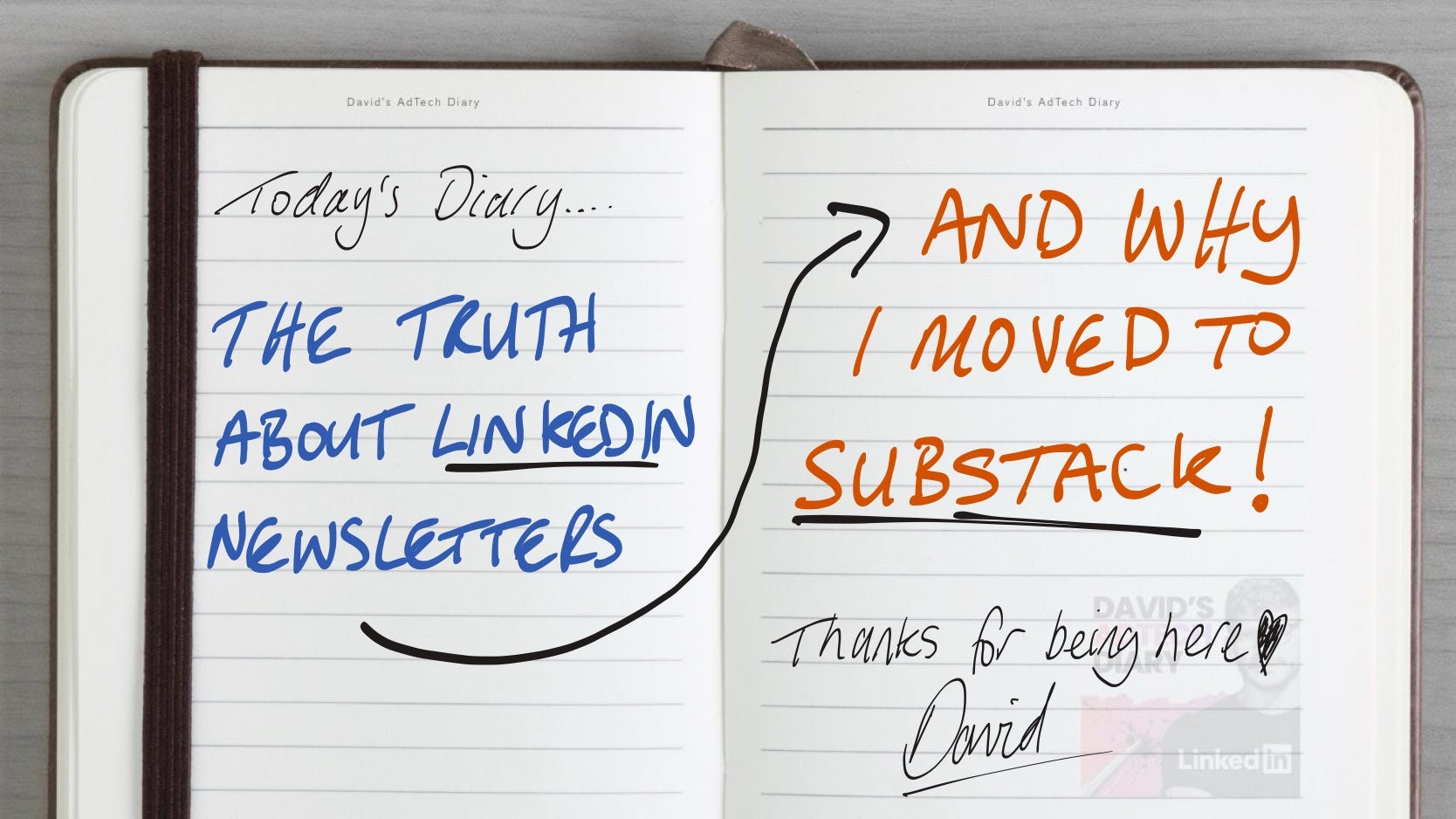
If you’re here, you probably clicked a link I sent you directly on LinkedIn!
Thank you… but that is exactly why I am here now.
What’s Going On?
For the last year I’ve been building David’s AdTech Diary on LinkedIn.
The numbers looked strong.
Subscribers climbing.
Big impression counts.
Good engagement.
New amazing connections (hi!)
On the surface, it looked like momentum.
But behind the metrics, something felt off.
I kept getting messages like:
“I’m subscribed but barely see it.”
“LinkedIn only showed me this weeks later.”
“I didn’t realise you were still writing these.”
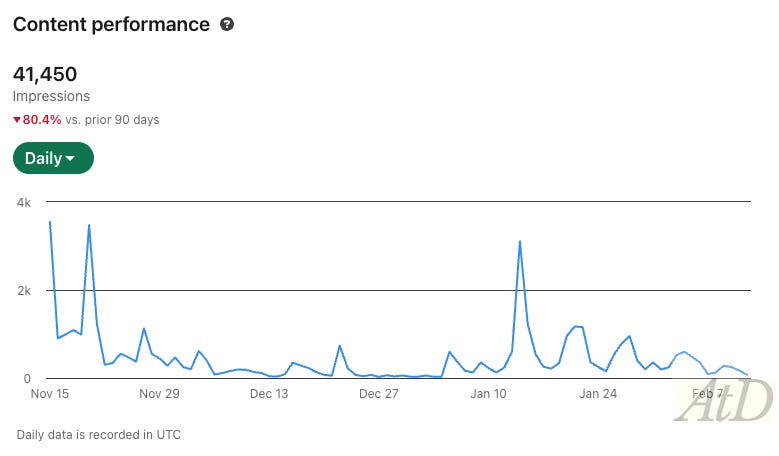
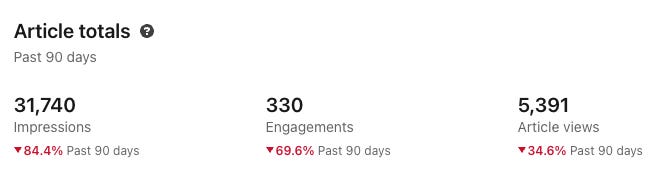
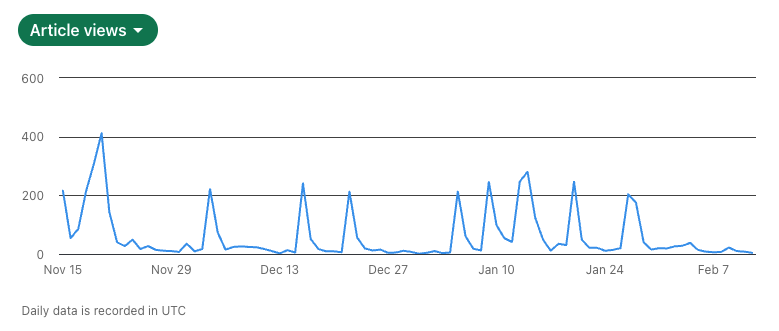
People who had chosen to subscribe were not consistently receiving the content.
That was the issue.
The Distribution Problem
On LinkedIn, you can build an audience.
What you cannot do is control delivery.
Visibility depends on the feed. And the feed prioritises activity, engagement and speed.
So you are gently pushed towards a certain pattern:
Post more.
Comment more.
Stay visible.
Keep engagement high.
Or slowly fade out of circulation.
That model rewards attention.
It does not reward depth.
What I Actually Want to Write
David’s AdTech Diary was never meant to be motivational soundbites or recycled industry news.
It was meant to be an honest look at:
• Margin pressures inside agencies
• DSP power dynamics
• AI hype versus operational reality
• Retail media consolidation
• The structural issues nobody puts in pitch decks
That type of writing needs room. It needs nuance. It needs the ability to be direct without worrying whether it will be buried because it did not generate enough early reactions.
LinkedIn is brilliant for networking and reach.
But it is not built for serious publishing.
Why Substack Makes More Sense
Substack does one simple thing better.
It delivers what people subscribe to.
When you subscribe here:
• The post goes straight to your inbox
• You do not depend on the feed
• You can reply directly
• I can build a direct relationship with you
No engagement games.
No algorithm shaping visibility.
No need to dilute ideas to make them more feed friendly.
This is slower.
More deliberate.
More intentional.
It is for people who actually want to read and think, not just scroll between meetings.
The Honesty Shift
There is also a difference in tone.
On LinkedIn, there is always an awareness of who is watching. Clients. Platforms. Sales teams. Recruiters. Prospective employers.
That inevitably shapes how things are written.
Here, I can write properly.
Long form.
Commercially realistic.
Clear about what works and what does not.
If something in this industry is structurally broken, I will say it.
If AI is being oversold, I will say it.
If agencies are packaging buzzwords as strategy, I will say it.
Not for noise. For clarity.
Because most people inside AdTech see the gap between the narrative and the operational reality every single day.
Who This Is For
This is not designed to please platforms or optimise for a feed.
It is written for operators.
For the people inside dashboards.
Inside commercial planning.
Inside campaign troubleshooting.
Inside QBR decks where everyone knows the attribution story is not quite as clean as the slide suggests.
If that sounds familiar, you are exactly who this is for.
What Happens Next
LinkedIn will still get the shorter, public posts. The surface level commentary.
But the deeper breakdowns, the commercial mechanics, the community and uncomfortable realities about where AdTech is heading will live here.
If you have ever messaged me saying:
“Keep going.”
“This is what people are thinking.”
“We need more of this.”
Then this is where you subscribe properly.
I would rather build a smaller group of serious readers than chase broad visibility that never turns into real connection.
So… if you want the commercially honest version of what is happening in AdTech, welcome.
You are in the right place.
k, thanks, bye